Shopify development
Theme customization vs a custom theme
A distinctive store does not always need a new theme. Separate the design changes from the functionality you need before choosing the scope.
There are three useful starting points.
| Approach | A good fit when | Work to plan |
|---|---|---|
| Theme editor | The existing sections and settings can present your products and brand well. | Content, layout, fonts, colors and supported app blocks. |
| Targeted customization | The foundation works, but a section, interaction or integration is missing. | Defined Liquid, CSS or JavaScript changes, with compatibility and regression tests. |
| Custom theme | The required layouts and repeated interactions would fight the current foundation. | Templates, reusable sections, editor controls, documentation and ongoing support. |
A premium theme is still a starting point, not a guarantee of fit. A custom theme is not automatically headless: replacing the storefront architecture is another decision, with its own integration and maintenance work. Still choosing the platform? Read our Shopify vs Wix comparison.
CARBON.DEPT / Product discovery
Scope the missing behavior.
The CRBN vehicle finder enables model and fitment choices in sequence, then routes the shopper to a relevant collection or product. That is a concrete browsing requirement to evaluate, rather than a request to make the whole store “more custom.”
This example demonstrates a specific storefront feature, not that the entire theme was built from scratch.
See the vehicle-led storefront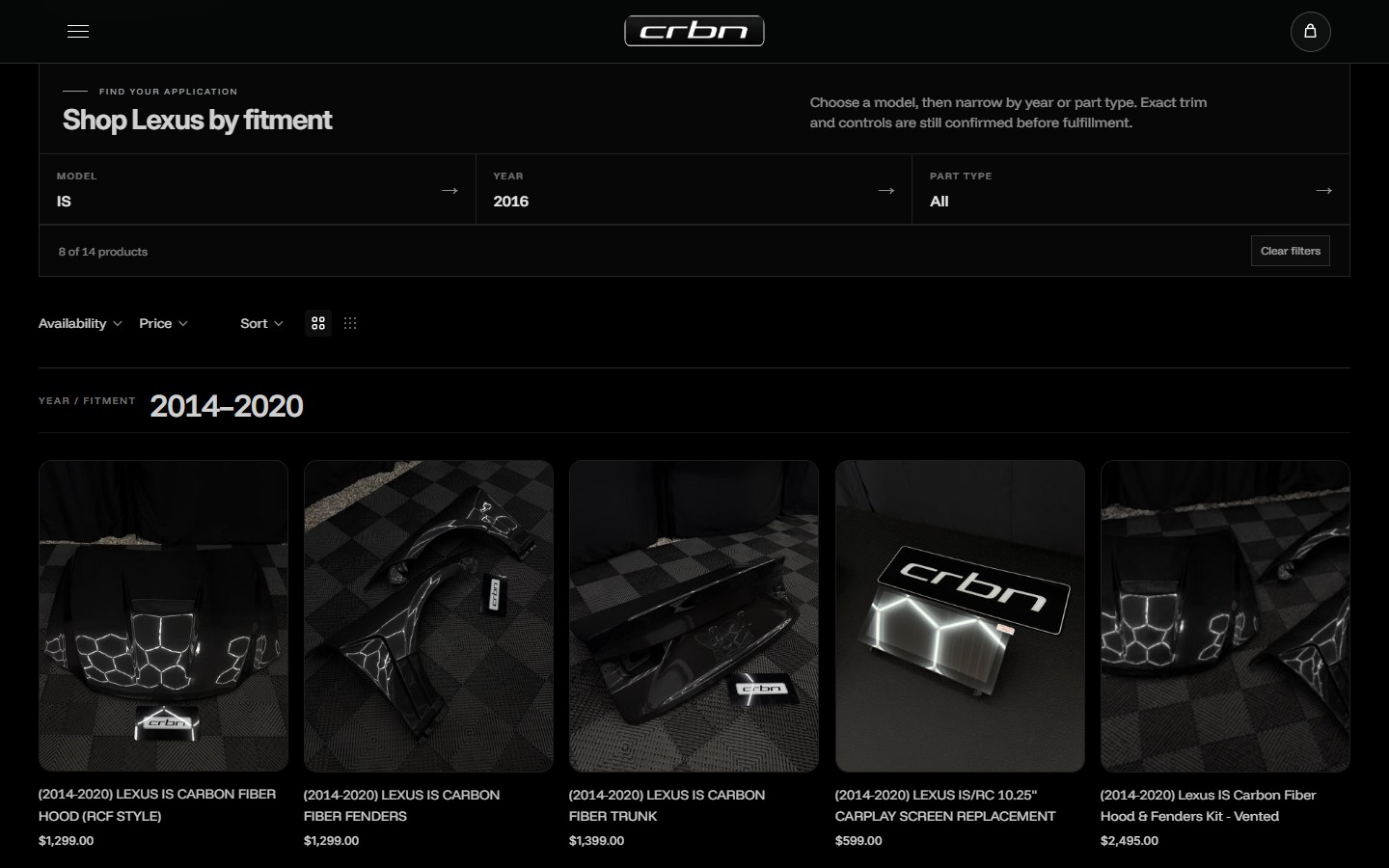
A custom workflow is not the same as a custom theme.
Direct Laser Source needed garment quantities, supplier data, artwork placement and decoration previews to agree. A fresh theme alone would not define those pricing and order rules.
Keep the functional scope separate: what belongs in the theme, an app, a connected service or a custom builder? Our app-versus-builder comparison covers that decision.
Decide what you can edit afterward.
Before approving development, ask the team to demonstrate the changes you make regularly. For a new section, that might mean changing text, swapping images, reordering content or assigning it to a template without editing code.
- Merchant controls
- Name the settings and content the store team can change, and the rules that still need development.
- Compatible tools
- Identify the apps, search, reviews, analytics and custom workflows that must keep working.
- Ownership and support
- Agree account access, theme licensing, source handoff, documentation and responsibility for fixes.
Plan the next update before the launch.
Shopify documents that some code changes can carry into a theme update when they do not conflict. Others need to be reapplied. App compatibility and CSS selectors also need checking.
Keep a copy, review changes in an unpublished theme and test important journeys before publishing. Custom code does not make updates impossible, and using a pre-built theme does not remove the need for testing.
Price the gap, not the label.
A useful quote names the templates or sections affected, required integrations, content work and acceptance tests. Ask which work is a one-time build, which has recurring costs, and what future maintenance includes.
A theme-editor change, a vehicle finder and a complete theme are different scopes. We do not quote a custom store from the standard brochure-website package price. Use the existing theme when it meets the requirement; commission more only when there is a clear benefit to the business.
Before you choose
Theme questions
Will changing a Shopify theme delete my products?
Shopify manages products and collections separately from the theme. Their presentation, theme settings, templates and customizations still need checking in the new theme. Inventory the current setup before switching.
Do I need a fully custom theme for a product builder?
Not necessarily. A builder can be a scoped feature within an existing storefront. The requirements determine the app, theme and backend work; a new theme by itself does not solve supplier access or order pricing.
Is a custom theme always faster?
No. Performance depends on implementation, media, scripts, apps and the pages customers use. Compare measured results on representative pages and devices instead of treating the word custom as a speed guarantee.
Start with the missing piece.
Send your store URL, the change you need and the tools that must keep working. We will scope the appropriate level of Shopify work.
Sources and scope
Platform documentation checked October 16, 2026. Project examples illustrate specific DVS features, not a claim that every project uses a fully custom theme.