Print-shop platforms
InkSoft vs Shopify for print shops
Keep, replace or connect? Start with the way your shop quotes, sells and produces an order.
Compare the three setups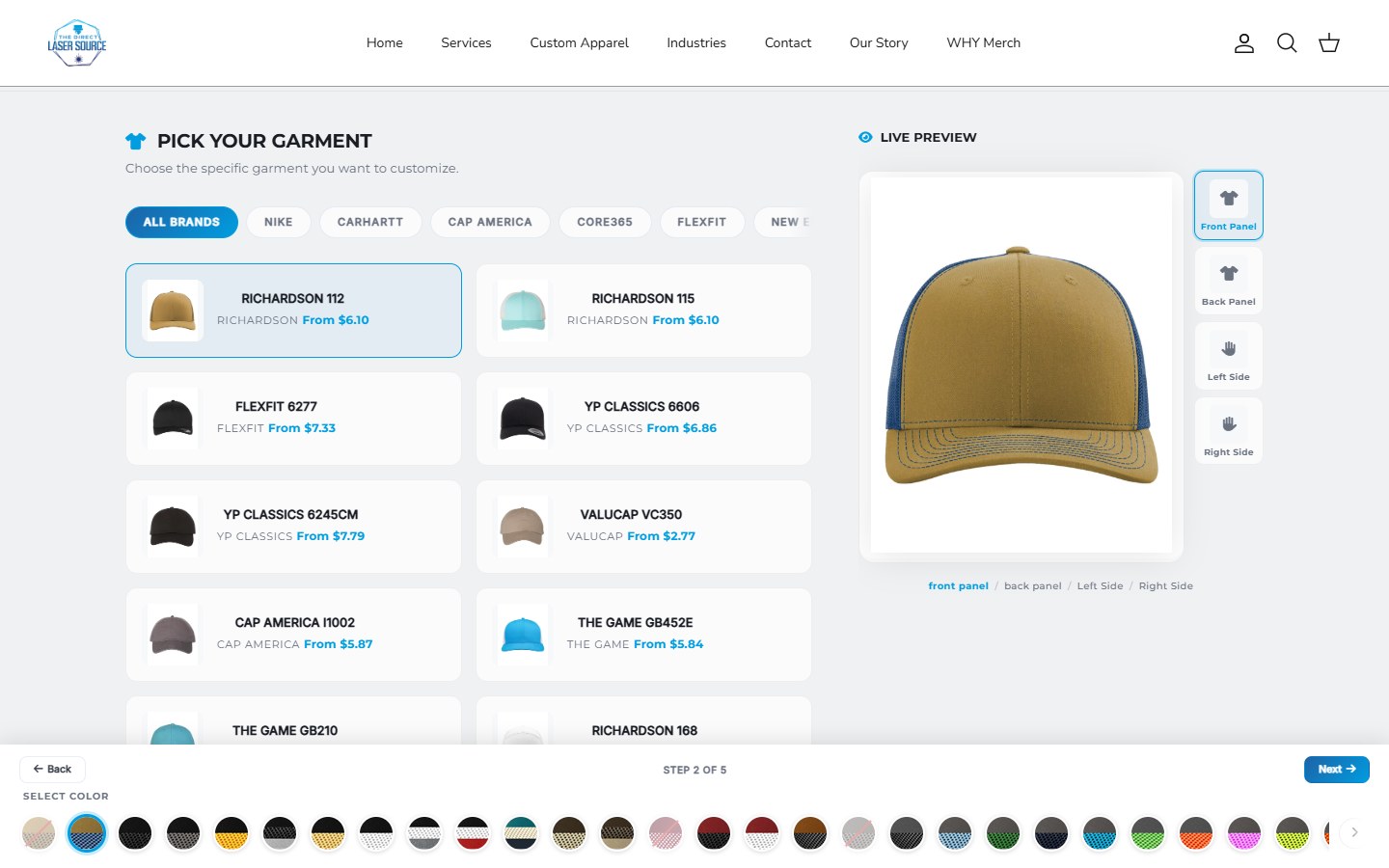
Choose the system, not just the storefront
Three setups. Different responsibilities.
A new storefront does not automatically replace your pricing rules, art approvals or production tools. Keep what works; identify the missing step.
Keep InkSoft
Worth considering when your shop already relies on its decorated-product workflow. InkSoft documents quantity-based screen-print pricing, setup charges and an embedded designer with its own checkout.
Can the existing setup serve customers better without moving orders to a new platform?
Use Shopify
Worth considering when the storefront and buying journey need more flexibility. Scope product selection, decoration pricing, artwork and order details explicitly; a theme alone is not your production system.
Who handles quoting, proof approval and production once the order arrives?
Connect the systems
Worth considering when the shop wants a different customer-facing site but needs to retain operational tools. The right connection depends on the platform, plan and data the business needs to move.
Which system owns the price, stock, artwork and final order?
DVS work / Direct Laser Source
The buying journey is the custom part.
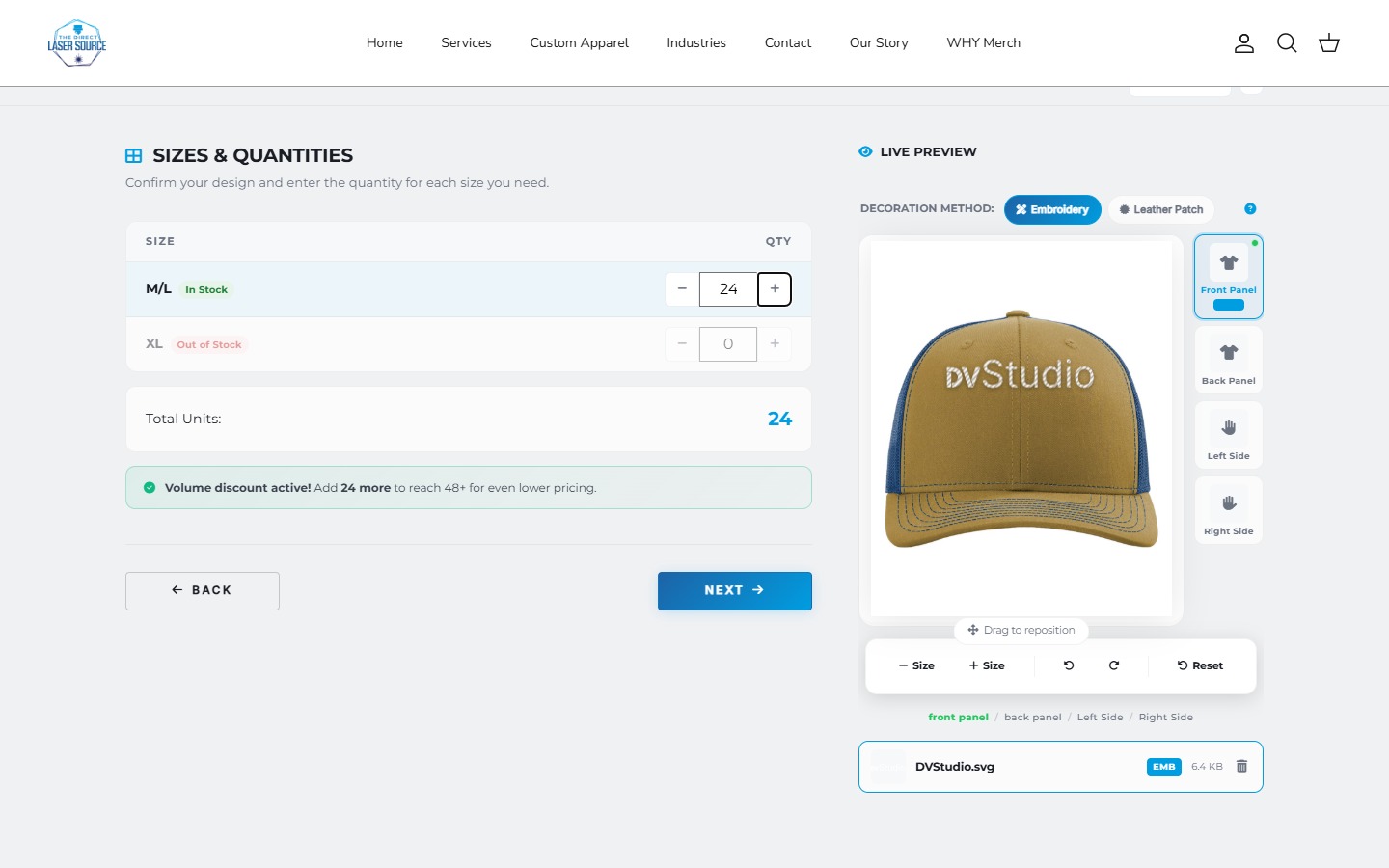
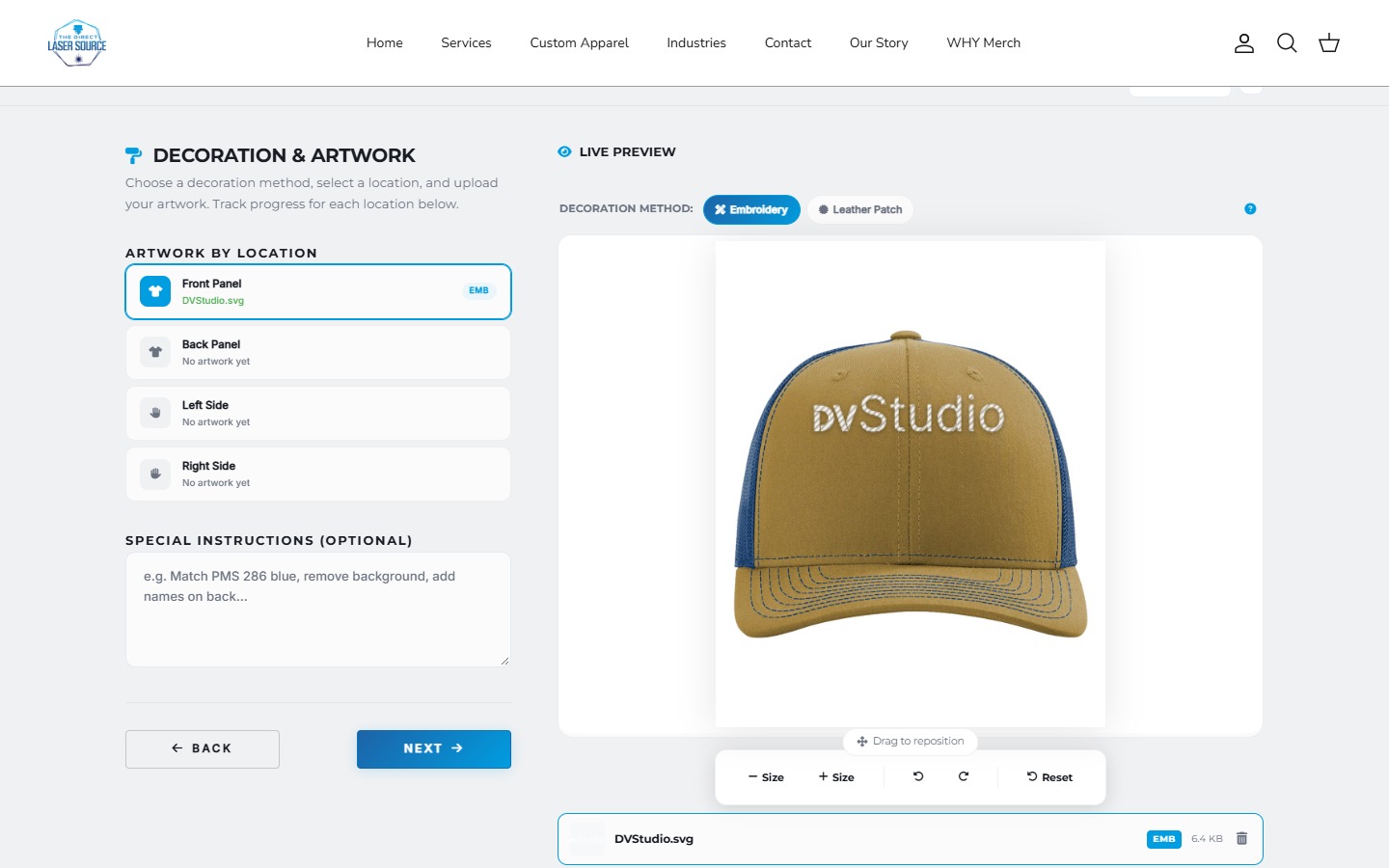
For Direct Laser Source, we built a Shopify apparel-ordering experience around supplier data, garment quantities, decoration choices and artwork preview.
That is an example of a tailored storefront workflow, not an InkSoft or DecoNetwork integration. The preview does not establish production approval or a completed checkout.
Explore the projectWhat a hybrid actually means
An embed and an integration are not the same.
InkSoft inside another website
InkSoft's Designer Embed lets customers choose, design and check out inside a non-InkSoft website. Its checkout is limited to orders within the embed. Do not assume those items share a Shopify cart or order record.
A custom API connection is a separate scope. InkSoft currently requires an Unlimited license and an additional monthly fee for custom API access, distinct from keys for supported integrations. Check API eligibility.
Shopify in front of DecoNetwork
DecoNetwork documents a Shopify fulfillment connection: order and design information go to DecoNetwork, and tracking returns to Shopify. It requires a DecoNetwork Fulfillment Center and the appropriate setup.
Inventory does not automatically synchronize between the systems. Product and variant mapping, artwork fields and shipping settings still need attention. Confirm the exact shopper-design handoff rather than assuming all editors work with it. Review the integration limits.
These are documented platform options, not DVS-tested connectors. Third-party tools also exist, including DecoBridge; evaluate the actual files, order data and support arrangements before relying on a connection.
Before changing platforms
Follow one real job from quote to production.
A mixed-size garment order with two print locations tells you more than a homepage demo. Ask each proposed setup to handle the same job.
- 01
Product and availability
Check garment, color and size selection, then identify the source and freshness of stock data. A catalog import is not a live availability check.
- 02
Price and artwork
Change quantities and decoration locations. Confirm setup charges, the charged total and which artwork belongs to each item. Treat a visual preview and an approved production proof as separate steps.
- 03
The record staff receive
Trace the order, files and approval status into the working system. Agree who handles failed transfers, stock changes, cancellations and future integration updates.
Before you commit
Print-shop platform questions
Should every print shop move from InkSoft to Shopify?
No. If InkSoft already supports how you price and handle jobs, a redesigned website or embedded designer may be enough. Consider migration only when the missing capabilities justify rebuilding and maintaining the workflow.
Can Shopify replace our quoting and production software?
Do not assume a storefront replaces those responsibilities. Specify your quoting, artwork approval, purchasing and scheduling needs, then decide which system owns each one. Apps or custom work should be evaluated against that list.
Which setup is cheaper?
Compare the required plans, apps, transaction costs, implementation and ongoing support for the same job. Include integration eligibility and maintenance. A low starting subscription is not the full cost of an operational print-shop setup.
Will moving to Shopify improve our search rankings?
A platform change does not guarantee better rankings. Keep valuable content and URLs where possible, map necessary redirects and check the new site's crawlability. Use a migration plan rather than assuming new software preserves visibility.
Keep the tools that work.
Bring your current site, the systems behind it and one order customers struggle to place. We can scope the missing steps before recommending a rebuild.
Sources and scope
Official documentation checked October 22, 2026. Platform fit is our assessment, not a hands-on connector benchmark. Project media shows DVS's Shopify work, not an InkSoft or DecoNetwork implementation.